Begin Tai Chi Without the Pressure to Keep Up
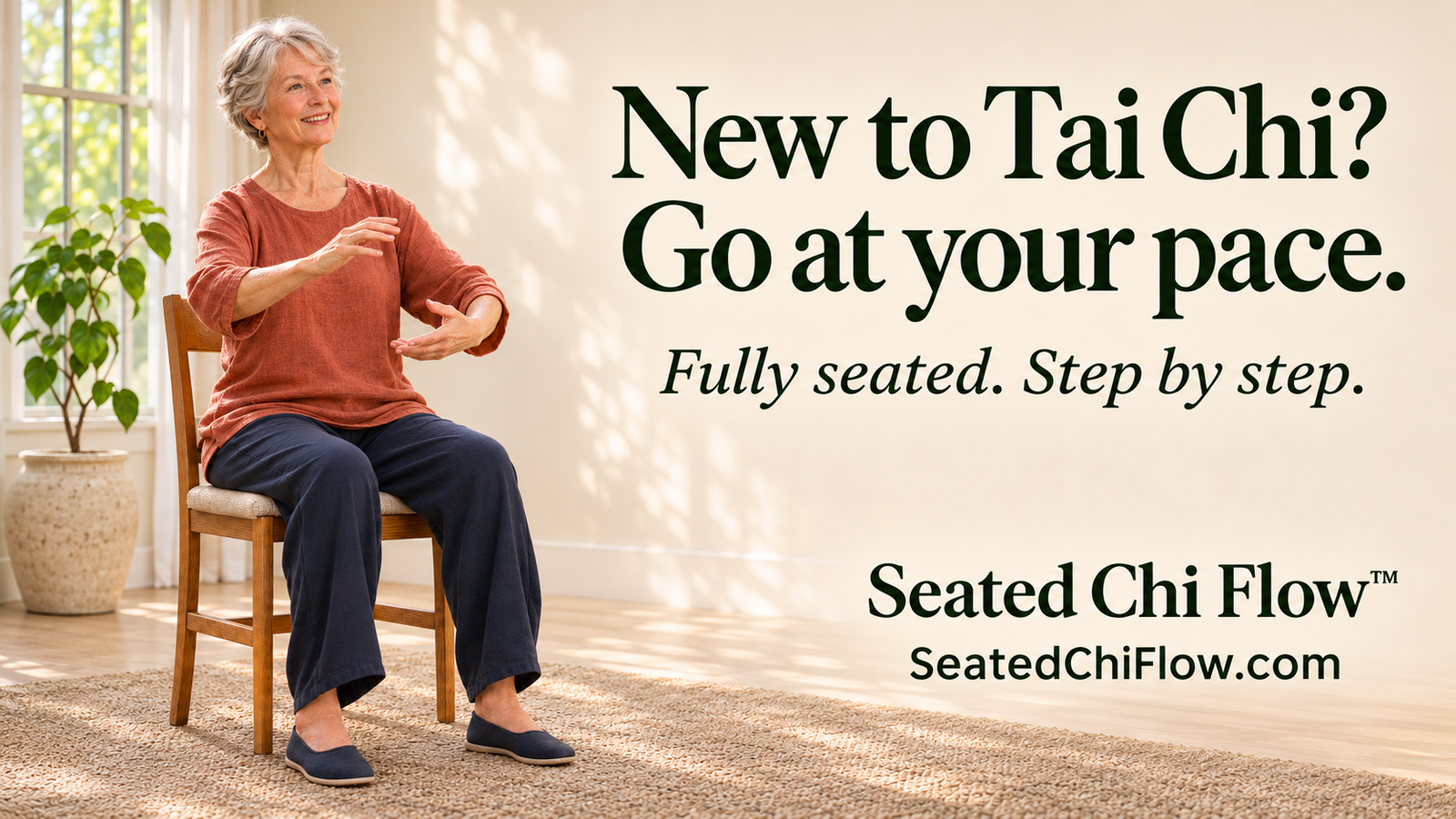
You should be able to try Tai Chi without feeling that you are already behind.
Perhaps you like the idea of slow, deliberate movement, but joining an exercise class brings another set of concerns. Will you need to stand throughout? Will the instructor move on before you understand? What happens if you need a break?
When you are unfamiliar with Tai Chi or Qigong, those questions can make starting feel more complicated than it needs to be.
A fully seated, step-by-step practice offers a different starting point. You can explore the movements from a chair, follow the guidance, and decide how much you want to do. Being a beginner becomes an opportunity to become familiar with the practice, with room to pause along the way.
1. Choose a Starting Point You Can Actually Participate In
Before choosing instruction, consider what would make a practice approachable for you today.
If standing exercise feels uneasy or balance is a concern, a fully seated format may be an important part of that decision. If following unfamiliar movements takes concentration, clear, gradual instruction may matter more than having a large collection of routines.
Useful questions include:
- Does the practice stay seated from beginning to end?
- Is prior Tai Chi or Qigong experience expected?
- Can you pause the instruction and revisit a movement?
- Are you encouraged to work within your own comfort level?
These questions help you assess the actual experience of participating.
Imagine beginning a video and discovering that the next movement requires getting onto the floor. Even if the rest of the session appeals to you, that transition may make it unsuitable. Knowing the format beforehand lets you choose with a clearer understanding of what you will be asked to do.
2. Let Familiarity Be Enough for Your First Practice
Your first session does not need to demonstrate how much you can accomplish.
It can simply help you become familiar with the instructor’s voice, the pace of the guidance, and the way the movements are introduced. You might watch a section before joining in. You might follow part of a routine and leave the rest for another occasion.
That is a reasonable way to approach something unfamiliar.
For example, if an arm movement takes a little attention to understand, you can pause the video rather than hurry to catch the next instruction. When you return to it, you are returning to something you have already begun to recognize.
Attention to breathing is also part of this style of practice. You do not need to treat every reminder as another task to master. Give yourself room to listen and become acquainted with the guidance.
The immediate reward can be modest but meaningful: you have found a way to participate without needing to match a class’s pace.
3. Keep the Decision to Pause in Your Own Hands
A guided practice provides direction. Your comfort still matters throughout it.
Before beginning, give yourself permission to do less than the complete routine. A session’s running time does not create an obligation to continue, and reaching the end of a video is not a test.
You can pause to review an instruction, take a break, or finish for the day. You do not need to make your movement look identical to the demonstration.
This matters especially when stiffness, joint discomfort, or concerns about movement are part of your decision. Fully seated instruction removes standing and floor transitions from the routine, but it does not establish that every movement is appropriate for every person.
If you have a medical condition or specific concerns, consult your healthcare provider before beginning a new movement program. Stay within your comfort level rather than forcing a movement to follow along.
4. Consider Guidance Built Around Seated Beginners
Seated Chi Flow™ is one option for putting this approach into practice.
It offers gentle, fully seated Tai Chi and Qigong taught step by step. There is no standing or floor work, and no previous experience is required. Most sessions last about ten minutes, with room to move at your own pace and stop whenever you choose.
New members receive a short introductory video. Weekly guided practices arrive by email through Substack, accompanied by a one-page PDF with movement cues, breathing reminders, the purpose of the flow, and safety notes.
That companion gives you something to revisit when you want to review the guidance more slowly. Membership also includes archive access and quarterly live guided sessions with replays.
The program is intended for gentle movement rather than intense workouts, weight loss, or athletic performance. It is not medical treatment, and individual experiences will vary. You can cancel anytime.
If what you want is a beginner’s introduction to Tai Chi and Qigong with room to learn, pause, and remain seated, you can explore Seated Chi Flow and decide whether its approach fits you.